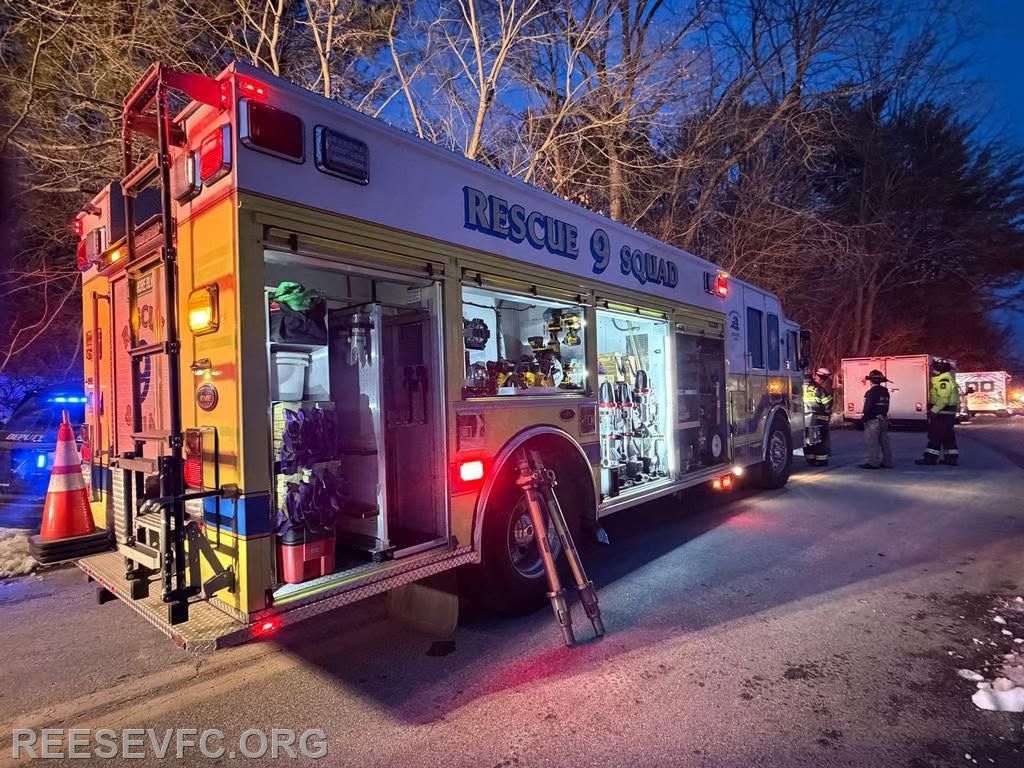
No, you won’t be paid as a volunteer firefighter in Maryland. At Reese and Community Volunteer Fire Company, a new member puts in 300 to 400 hours during the first year without a dime of wages, and the hours start on day one. What you get in return is training that costs you only time and two programs that reward long service. Neither works like a paycheck, and the tax benefit doesn’t start until you’ve been active for 36 months.
Is There a Stipend, Per-Call Fee or Hourly Rate?
Volunteer service with us carries no stipend and no pay for answering a call. Maryland’s tax deduction for volunteers starts from the same place. A qualifying member has to serve without compensation, apart from nominal expenses or meals. Those expenses and meals are a far cry from a wage, so they don’t change the answer. No benefit a Maryland volunteer receives works like a paycheck.
What Costs Does the Fire Company Cover?
Firefighter I and EMT classes are free to the members we sponsor, so they cost you nothing but time. We also buy all of the academic textbooks, which takes a real expense off a new member’s plate. Those classes run through the Maryland Fire and Rescue Institute, known as MFRI. It’s the state’s emergency services training agency. Paramedic school is a different story, because the tuition is for the member to pay. Our guide to paramedic training after EMT lays out the cost and who pays it. It’s worth a read before you decide how far to take your training. For training and textbooks, we ask for your hours and nothing else.
What Comes Back to You Over the Years?
Two programs reward volunteers who stay: a state tax subtraction and a county service award. Because both build on years of membership, neither pays out early. A new volunteer needs other income for household bills.
What Is the Maryland Volunteer Tax Subtraction?
Qualifying members can take $7,000 off the income Maryland taxes, according to the Comptroller of Maryland’s 2025 resident tax booklet. Because it’s a subtraction, it lowers your taxable income by $7,000 and doesn’t cut your bill by that amount. What you save depends on your own return, so a tax preparer can run the numbers. To claim it, you attach a certification from a public safety organization like ours to your Maryland return.
Until you reach 36 active months, the subtraction isn’t available to you. Under Maryland’s volunteer subtraction law, you need 36 months of active membership within the last 10 calendar years. You also have to earn at least 50 points a year in two or more categories under your county’s point system. Qualifying for active status under that system is part of the deal too.
What Is the Length of Service Award Program?
A county can fund a service award for volunteers who stay active over the long haul. The formal name is the Length of Service Award Program, shortened to LOSAP, and each county writes its own terms. The Maryland State Firemen’s Association describes LOSAP as a county or municipal-funded program. That means service time and points don’t carry over if you join a company in a different county.
The state tax subtraction is different, because Maryland law sets its rules for every county. The state also lets you subtract any award payments a county or municipality funds. New members complete their LOSAP paperwork at orientation and get paired with a buddy. Before you count on the award, confirm Carroll County’s current age, years of service, and payment amount with us. Both programs reward how long you stay, and neither works like a paycheck.
How Many Hours Does Serving Take?
By our count, your opening twelve months run 300 to 400 hours, with most of them landing in the first several months while you’re in certification training. Four commitments make up that time:
- Firefighter I training at 135 hours plus 45 on hazardous materials operations, or EMT training at 208 hours plus 9 on hazardous materials awareness
- Drills, BINGO nights, and the rest of the company schedule
- Company meetings on the first and third Tuesday of each month at 7:30 PM
- Standby shifts, which count toward your hours
Meetings are the easiest piece to plan around, since you can mark the first and third Tuesday on your calendar in advance. Members treat a quiet standby shift as seriously as a busy call. Before you ride on calls, you’ll need a physical, and riding members repeat one every year. Expect the early going to be the heaviest stretch. Next to a full-time job and a family, that’s a big share of your evenings. Plan on 300 to 400 hours in your first year, none of them paid.
How Do the Hours and the Benefits Compare?
The benefits run on different clocks, from classes at the start to an award that follows years of service.
| What you receive | What it takes in time or years | Source |
|---|---|---|
| Firefighter I or EMT classes with no tuition for sponsored members, plus all academic textbooks | 135 hours plus 45 on hazardous materials operations for Firefighter I, or 208 hours plus 9 on hazardous materials awareness for EMT | Reese and Community Volunteer Fire Company |
| A $7,000 subtraction from taxable income each year you qualify | 36 months of active membership in the last 10 calendar years, with 50 points a year in at least two categories | Comptroller of Maryland and the Maryland General Assembly |
| A county-funded service award | Years of service in one county’s program, because time and points don’t transfer between counties | Maryland State Firemen’s Association |
| Part of tuition and mandatory fees through the Riley scholarship | At least 50 points in the tax year before the award, then one year of service after finishing study | Maryland Higher Education Commission and Maryland Education Article |
The training row pays off quickly, while the Riley row asks for a year of service after you finish your studies. The scholarship covers part of tuition and mandatory fees, so costs beyond those stay with the student. It only matters if college is in your plans. The hours come first, and the rewards come later, which is worth knowing before you start. Each benefit is earned with time served, and none of them is paid out as wages.
Talk It Through With Our Team Before You Decide
Parents and career-minded adults have the most to weigh, and a calendar in front of you makes the hours concrete. Bring yours and talk with our team about what a first year looks like, then see whether the hours fit your life. A conversation costs nothing and commits you to nothing.