You already know where your front door is. You probably know the back door too. But can you name a second way out of your kid’s bedroom before smoke fills the hallway? The U.S. Fire Administration puts the real window at under two minutes once a home fire starts to spread. That isn’t enough time to improvise a plan in the moment. A working fire escape plan isn’t a checklist stuck to the fridge. It’s a room-by-room map your family has walked, tested, and can run in the dark. That map starts with a rule most households never apply consistently. Every room needs two ways out, not just the rooms near a door.
If you rent rather than own, a few pieces of this work differently. That’s covered separately in a piece on fire safety for apartment renters. For everyone else, the room-by-room logic below is the same no matter what your house looks like.
Map Two Ways Out of Every Room
Every room needs two ways out, a primary exit (usually a door) and a backup (usually a window). If you can’t name both for every bedroom right now, that’s the gap to close first. The National Fire Protection Association treats this as the foundation of any escape plan, not an advanced step. Walk into each room and check three things:
- The door opens fully and isn’t blocked by furniture, toys, or a stack of laundry.
- The window opens without a key, a tool, or years of stuck paint holding it shut.
- The path from the bed or desk to both exits stays clear, even with the lights off.
A closet doesn’t count as an exit, and neither does a window that only cracks open six inches. One exit per room means the plan stops there, and fire won’t wait for a second option.
While you’re in each room, check your smoke detectors too. Many quietly age past their own expiration date without anyone noticing. A detector that’s stopped working gives your family less warning and less of that two-minute window to work with.
Give Upstairs Bedrooms a Real Second Way Out
An upstairs bedroom’s backup exit is a window. That window only works if it opens wide and low enough for someone to climb through fast. Check three things before you count on it:
- The window isn’t painted or nailed shut.
- Any security bars have a quick-release mechanism everyone in the house knows how to use.
- Nothing large enough to trip someone sits underneath the window on the outside.
Kids need to physically practice this, not just hear about it. Have them open the window themselves, more than once, so the motion feels familiar when it matters. A stuck window turns your backup exit into a dead end, and you won’t find out until it’s too late.
Add an Escape Ladder When a Window Is the Only Way Down
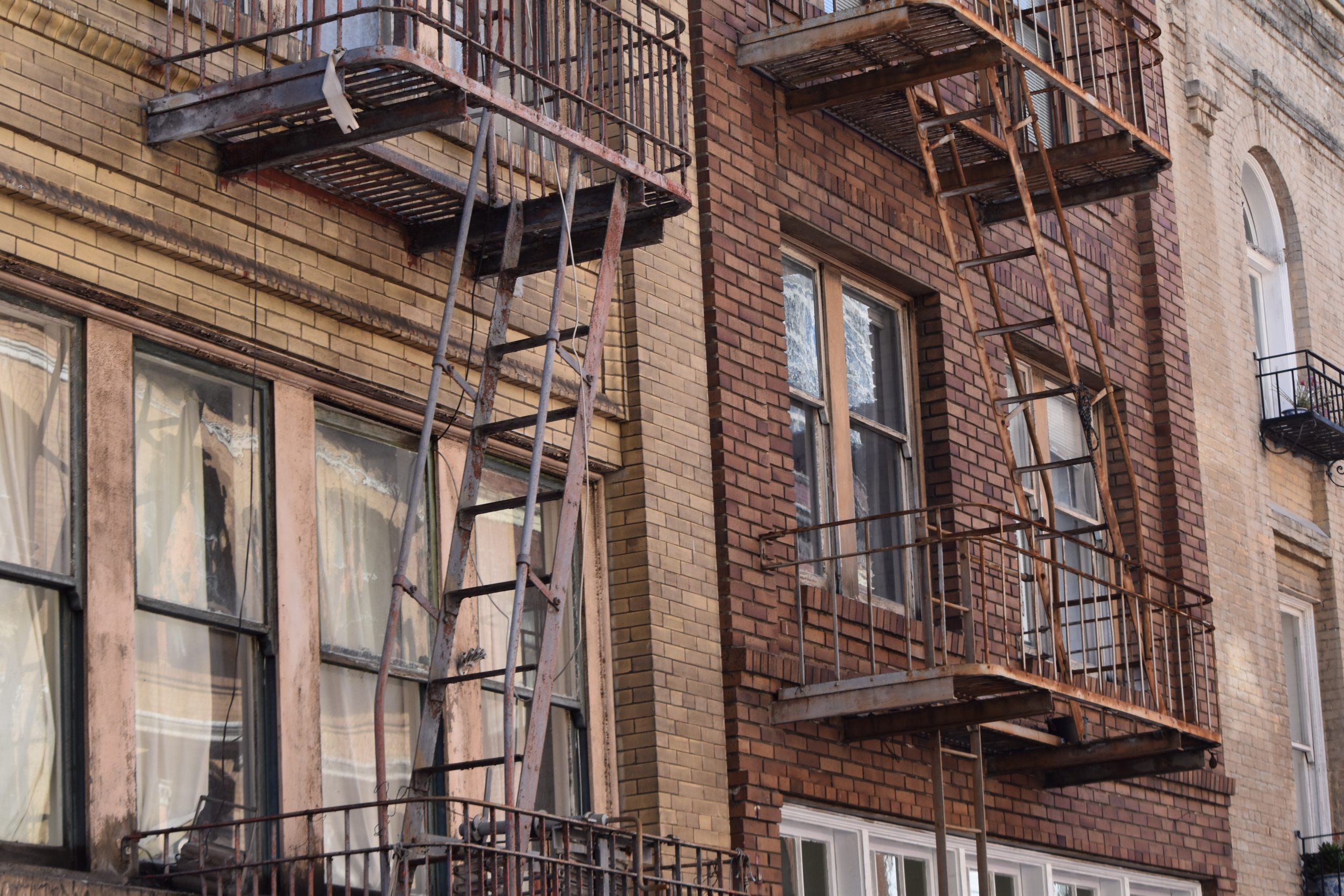
If a bedroom sits on the second floor or higher, keep an escape ladder there. Store it near the window, somewhere easy to reach without digging through a closet. The Electrical Safety Foundation International is direct about how to treat it. A window and ladder work as your backup when every other way out is blocked. They aren’t something to rehearse by climbing down. Save the real descent for an emergency. Practice instead covers what’s safe ahead of time:
- Know exactly where the ladder is kept.
- Read its instructions together as a family.
- Understand how the hooks attach to the sill.
A ladder only helps if everyone already knows how to use it before they ever need to.
Check the Door Before You Open It
Before you open any door during a fire, touch it with the back of your hand. If it’s warm, use your second way out instead. Ready.gov walks through this method directly. Check the door, the doorknob, and any visible gaps for smoke before turning the handle. A door that feels cool but has smoke seeping around its edges is still a door to leave shut.
UL’s Fire Safety Research Institute backs a simple habit that’s easy to skip, closing bedroom doors before bed. Their Close Before You Doze testing found that closing an interior door keeps that room’s temperature under 100 degrees during a fire, against 1,000 degrees or more in a room left open. That difference can turn into real minutes, the same minutes your two exits depend on. A closed door won’t stop a fire, but the minutes it buys are the ones your escape plan needs.
Pick One Meeting Spot Everyone Already Knows
NFPA recommends one meeting spot outside the house, visible from the street. Everyone in the household should be able to name it without hesitating. A specific tree, a mailbox, or a neighbor’s driveway works better than a vague instruction like “meet outside.” A scared kid at two in the morning needs something concrete to walk toward, not a category to interpret.
Make sure the spot sits far enough from the house that firefighters have room to work when they arrive. Everyone in the house, including regular guests or a babysitter, should know the spot by name. Once they’re there, the rule is the same for all of them. Nobody goes back inside for anything. A meeting spot only works if everyone can find it without being told twice.
Practice the Plan at Least Twice a Year
NFPA recommends running a full home fire drill at least twice a year. A plan that’s only ever been talked about hasn’t been tested yet. Tie the drill to something you already do twice a year, like changing clocks or smoke detector batteries. That way it doesn’t depend on remembering a random date. Walk the route, open the window, and have kids practice the motion of getting out, not just describe it.
Practice in the Dark, Not Just Daylight
Most home fires happen at night, and smoke can cut visibility to almost nothing within minutes. Run at least one drill with the lights off. That teaches your family to count doorframes and furniture by feel instead of relying on sight. That single change separates a plan that works under pressure from one that only worked with the lights on.
Show the Same Commitment at Reese That Built Your Plan
A fire escape plan only protects your family if someone follows through on every part of it. That means the mapping, the practicing, and the habit of closing bedroom doors before bed instead of leaving them open. None of it works as a one-time project.
That kind of follow-through is the same thing Reese Volunteer Fire Department asks of the people who join it. New members put in 300 to 400 hours in their first year alone. That means training, riding, and learning the calls that come through Station 9. None of that shows up as one dramatic moment. None of it works if someone walks away after the first few weeks. It comes down to the same habit behind a working escape plan. You show up, and keep showing up, long after the first walkthrough is finished.
If building that kind of readiness at home has you thinking about your neighborhood, we’d like to hear from you. Reach out to our team at Reese Volunteer Fire Department about getting involved.